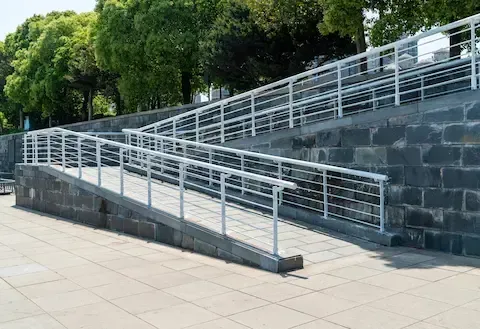
Winter Traction Finishes for Gresham OR Concrete Ramps
Choosing the right traction finish for a concrete ramp in Gresham means accounting for Oregon's wet winters and freeze-thaw cycles. The most effective options are a stiff broom finish applied during the pour, broadcast silica or polymer grit into a sealer coat, or an exposed aggregate surface. Each method grips wet and icy conditions differently. Broom finishes are low-cost and durable. Grit-in-sealer systems can be added to existing ramps. Exposed aggregate offers the highest long-term grip but costs more upfront. For accessible ramps serving seniors or wheelchair users in Gresham yards, the finish you choose directly affects safety from November through March.
Step 1: Assess Your Ramp's Current Surface Condition
Before selecting any traction treatment, walk the ramp surface when it is wet. A smooth troweled concrete surface will feel slick immediately. If your ramp already has a light broom finish but pools standing water along the edges, drainage may be the root issue rather than texture. Check for micro-cracking from past freeze-thaw cycles — Gresham regularly sees overnight lows drop below freezing through January and February, then climb above 40°F by midday. That cycle contracts and expands the concrete surface, degrading existing grip texture over time. Any sealer or coating applied over cracked concrete will delaminate within one season.
Step 2: Choose the Correct Finish for Your Situation
For new ramp pours, a medium-bristle broom finish drawn perpendicular to the direction of travel is the standard baseline. This creates parallel channels that shed water and grip wheelchair wheels and boot soles reliably. For Gresham's rainy season, a coarser broom pass provides noticeably more resistance on slopes above 1:12. For existing ramps, a broadcast anti-slip grit system works without demolition. A contractor applies a penetrating sealer or epoxy base coat, then broadcasts aluminum oxide or silica carbide grit at a controlled density before the coat cures. This bonds permanently and can be reapplied every three to five years. If you are planning a full ramp installation, explore your options for wheelchair ramps that include finish specifications from the start — this is far more cost-effective than retrofitting.
Step 3: Account for Freeze-Thaw Durability
Not all traction coatings survive Oregon's wet freeze cycles. Latex-based anti-slip paints typically peel within two winters in the Gresham area because water infiltrates beneath the coating before freezing and lifts the film from below. Penetrating silane-siloxane sealers with broadcast grit outperform surface coatings because the sealer bonds into the concrete pores rather than sitting on top. Air-entrained concrete mixes also help — if your ramp is being poured new, request an air-entrained mix from your concrete supplier. The tiny air voids give expanding water somewhere to go during a freeze rather than fracturing the surface paste. This is particularly important for ramps exposed to the sky in Gresham's east county neighborhoods where radiant cooling overnight is more pronounced than in urban Portland.
Step 4: Meet ADA Slope and Texture Requirements
A traction finish cannot compensate for a slope that is too steep. ADA guidelines require ramps to run no steeper than 1:12, meaning one inch of rise for every twelve inches of run. In Gresham residential settings with limited yard depth, some contractors are asked to push that ratio toward 1:10, which is non-compliant and unsafe regardless of surface texture. Confirm your ramp slope with a digital level before applying any finish investment. On compliant slopes, a medium broom finish achieves a surface friction coefficient above the 0.6 threshold recommended for accessible routes. Coarser grit broadcast systems can push that above 0.8, which provides additional safety margin for power wheelchair users and individuals using walkers in wet conditions. For a side-by-side look at ramp material and finish choices relevant to Gresham homeowners, read this wheelchair ramps comparison before finalizing your plan.
Step 5: Plan Seasonal Maintenance for PNW Conditions
Even the best traction finish degrades without basic maintenance. In Gresham, moss and biofilm accumulate on shaded north-facing ramps from October onward. A thin layer of green moss is nearly frictionless when wet and negates any texture the concrete surface provides. A diluted sodium hypochlorite wash applied in early October and again in March removes biofilm before it compresses under foot traffic. Avoid pressure washing at high PSI directly into the broom channels — this erodes the ridges over multiple seasons. A fan-tip nozzle at moderate pressure rinsing across the surface is sufficient. Inspect the ramp surface each fall and plan to reapply grit-in-sealer systems every four to five years as part of routine upkeep. If you live in one of Gresham's older neighborhoods east of 182nd Avenue where mature tree canopy creates persistent shade, plan for annual moss treatment rather than biannual.
