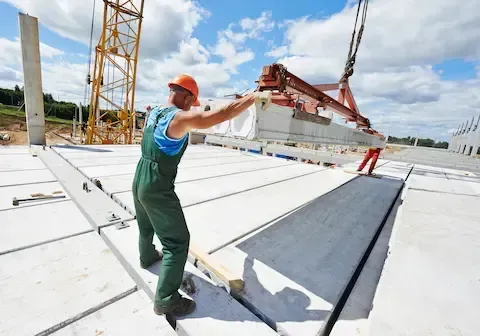
Commercial Pour Scheduling Across Gresham OR Winters
Winter in the Portland metro corridor doesn't shut down commercial construction, but it does demand a different level of planning. From the East Buttes to the Sandy River industrial corridor, contractors in the Gresham area deal with a specific pattern of cold mornings, saturated ground, and unpredictable precipitation windows that make concrete scheduling more complex than in drier climates. Pour timing decisions made casually in August can collapse entirely in January without the right infrastructure in place.
Why Winter Scheduling Is Different for Commercial Pours
Commercial concrete work operates on larger scales than residential flatwork, and that scale makes cold-weather exposure more consequential. A warehouse slab, tilt-up panel system, or multi-bay loading dock pad involves hundreds of cubic yards of material, long pour sequences, and extended finishing windows. When ambient temperatures drop below 40°F, hydration slows. When they drop below freezing, fresh concrete is at risk of ice crystal formation before adequate strength develops.
In the Gresham area, the critical risk window typically runs from mid-November through early March. During this period, daily low temperatures frequently fall into the 28°F to 36°F range overnight, even when daytime highs push into the low 40s. A pour that starts at 9 a.m. and finishes finishing work at 3 p.m. may be exposed to freezing temperatures before the slab has reached the 500 psi threshold considered the minimum for freeze resistance.
Planning Pour Windows Around Forecast Data
Experienced commercial schedulers in Gresham don't rely on general seasonal averages. They track short-range National Weather Service data for the Columbia River Gorge corridor, which behaves differently than Portland proper due to east wind patterns that drive rapid temperature drops. A forecast showing 38°F in downtown Portland may correspond to 29°F at a Troutdale or Wood Village job site when a Gorge outflow event is active.
Best practice for commercial scheduling involves identifying a pour window with at least 72 hours of forecast temperatures above 35°F, then building in contingency. That contingency usually involves two parallel tracks: a confirmed pour date with material on order, and a defined trigger condition that pushes the pour by 24 to 48 hours if conditions change. Ready mix plants serving the Gresham market, including facilities along the 84 corridor, can often accommodate short-notice adjustments if the relationship is established in advance and the plant is notified early.
Heated Enclosure Requirements for Large Commercial Slabs
On pours that cannot wait for ideal conditions, heated enclosures are the most reliable protection method. For commercial work, this typically means propane-fired heaters positioned inside polyethylene enclosures built over the slab area. The enclosures must be in place before the pour begins, not applied afterward, and they need to maintain a minimum of 50°F at the slab surface for at least 72 hours post-pour.
Gresham projects in the Gateway to Gresham industrial corridor and near the 181st Avenue commercial zones have used this approach successfully for winter tilt-up work. The cost of enclosure setup is significant but predictable, and it's far less than the cost of a rejected slab or a delayed project schedule downstream. On design-build projects, enclosure costs should be factored into the winter work line item before the contract is signed.
For Commercial Concrete projects in the Gresham area, specifying enclosure requirements in the contract documents and coordinating those specs with the concrete subcontractor before mobilization eliminates a common winter conflict: the general contractor expecting protection measures that were never scoped.
Mix Design Adjustments for Cold Weather Pours
Beyond enclosures and scheduling, mix design is a direct lever for winter performance. Accelerated mixes using calcium chloride or non-chloride accelerators speed up strength gain, reducing the window of freeze vulnerability. Higher cementitious content also contributes to faster heat of hydration, which provides some internal temperature buffer in the early hours after placement.
Heated water is another tool used by ready mix producers during cold conditions. Aggregate temperatures are harder to control but can be managed through covered storage at the plant. Specifying a minimum concrete temperature of 55°F to 60°F at point of delivery is a reasonable requirement for Gresham winter pours, and most local ready mix operations can meet that spec when the order includes the requirement upfront.
Ready Mix Coordination and Batch Scheduling
Commercial pours require batch sequencing that matches the site's placing and finishing capacity. In winter, that sequencing is more sensitive because cold temperatures can extend working time in some mix designs while heated mixes may flash set faster than expected. Communicating the pour environment, estimated ambient temperature, and protection setup to the ready mix dispatcher is part of the subcontractor's responsibility on any serious winter project.
In the Gresham and Troutdale area, transit times from plant to site are generally short enough that temperature loss during transit is manageable. However, any delay in placement, whether from equipment issues, form problems, or crew coordination gaps, can turn a 60°F mix into a 48°F mix at the point of consolidation. Winter pour planning should include a maximum allowable wait time in the field before a load is rejected and returned.
Common Scheduling Mistakes on Winter Commercial Projects
The most frequent error on Gresham winter projects is treating November as an extension of fall conditions. By mid-November, overnight lows and Gorge wind exposure have already shifted the risk profile significantly. Subcontractors who pour without enclosures in early November often assume the same conditions hold through December, and that assumption leads to cold-weather damage claims and schedule delays.
Another common mistake is failing to coordinate permit inspection timelines with weather windows. Footings and slabs that require inspection before cover cannot be left open in freezing weather waiting for an inspector. Scheduling inspections in the same weather window as the pour, or coordinating with the jurisdiction for expedited winter inspections, is part of competent winter project management in Multnomah County.
For a broader picture of project lifecycle costs and durability expectations, reviewing the Commercial Concrete cost overview helps project teams understand how winter decisions affect long-term performance and total cost of ownership.
Building Winter Scheduling Into Project Timelines
Commercial concrete work in the Gresham area can proceed through winter successfully when the project team treats cold-weather execution as a design problem rather than a weather inconvenience. The projects that succeed are those where enclosure costs are scoped in advance, mix designs are specified with temperature minimums, ready mix suppliers are engaged early, and forecast triggers for push decisions are defined before mobilization begins. Oregon winters are predictable in their unpredictability, and that predictability is exactly what a well-structured winter scheduling plan accounts for.
